
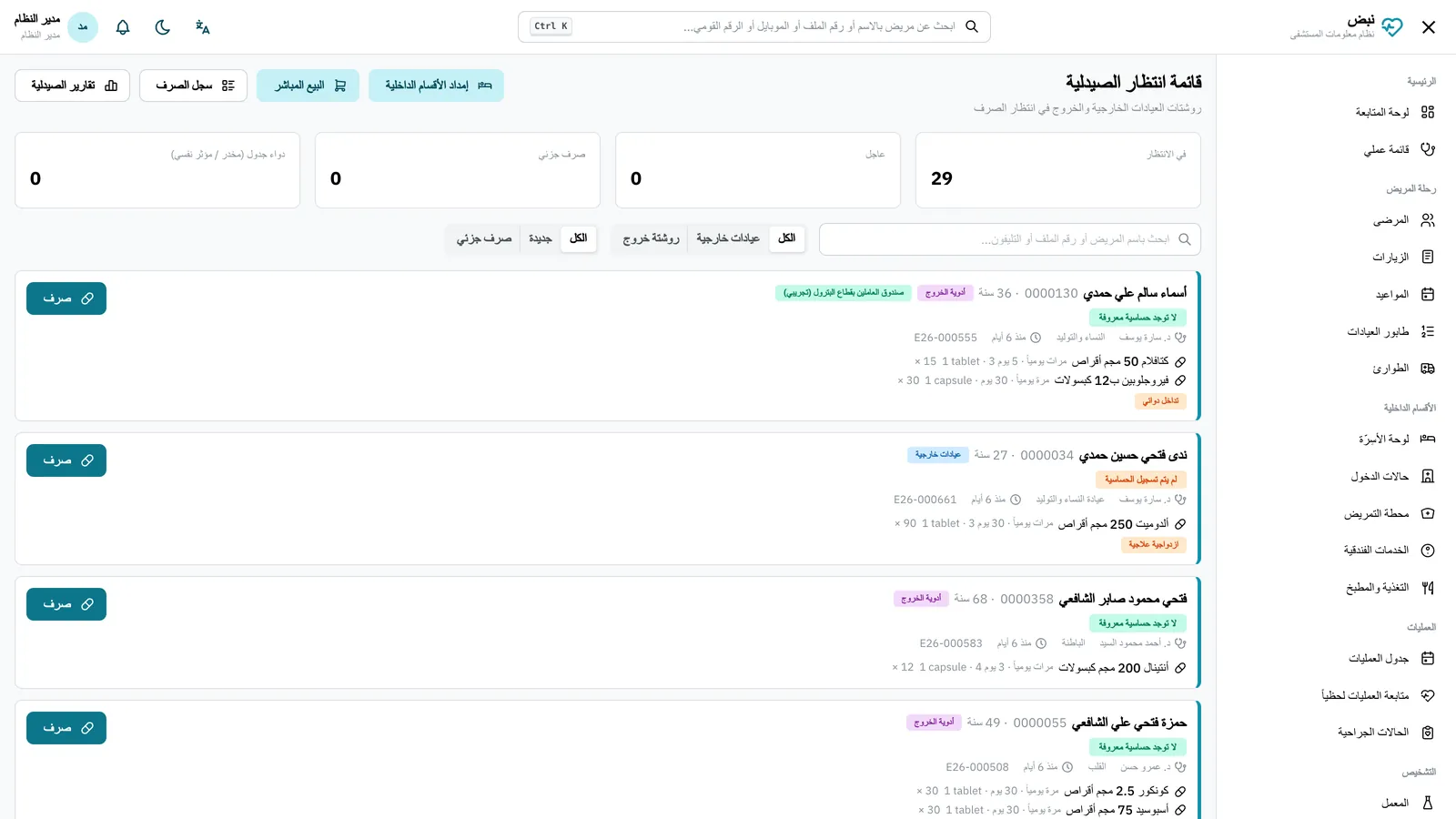
Dispensing for outpatients and wards
A prescription signed in the clinic appears in the pharmacy queue immediately, and the queue updates in real time. Inpatient medication orders are dispensed to the ward, over-the-counter sales use the same stock and the same prices, and returns go back to stock with their batch. Drug labels print at dispensing.
Safety at the counter
The same medication-safety engine that checks the doctor’s prescription supports the pharmacist: allergy and drug-class alerts, interactions, duplicate therapy and high-alert drugs. Controlled drugs have their own register.
Batches, expiry and first-expiry-first-out
- Every receipt records the batch and expiry date of each line.
- Issues pick the batch that expires first (FEFO), automatically.
- Expired stock is blocked from issue in every store.
- Balances by store, item, batch and expiry date.
Purchasing and goods receipt
Purchase orders are raised to suppliers and received against goods receipts. A receipt increases stock at moving average cost and posts inventory and input VAT against supplier payables, so the purchasing team, the stores and the accountant work from the same document.
A network of stores: requisitions, transfers and counts
Departments request items from the main store, and transfers move stock between stores with their batches. Counts can be blind, so the counter does not see the system quantity, and differences are posted as stock adjustments with an audit record.
Stock cost in the accounts
When stock is dispensed or consumed, its cost posts to the consuming department as cost of goods, against inventory. Department costs and the inventory balance in the balance sheet come from the same movements as the shelf balance.
Drug track and trace (EDA)
Nabd reads GTIN, batch and expiry from drug barcodes and produces the track-and-trace export file for the Egyptian Drug Authority.
Planned, not available yet: serial-level stock, the daily dispensing upload API and quarantine of packs that cannot be verified.
Starting with your current stock
Items and opening stock (store, item, batch, expiry, quantity and unit cost) are imported from Excel or CSV. The whole file is checked first and imported all or nothing, with one opening entry in the ledger.